Changzhou Laizap Opto-Electro Technology Co., Ltd.
News

What Does Red Laser Level Accuracy Mean in Practical Applications?

2026-10-28 0 Leave me a message

A contractor is preparing to install a suspended ceiling in a commercial building. The specification calls for the ceiling grid to be level within 3mm over a 10-meter span. The contractor has a Red Laser Level that is rated at +/- 0.2mm/m. Is that good enough? The answer depends on how the accuracy specification is interpreted and how it translates into the actual job site. A laser level rated at +/- 0.2mm/m will have an error of 2mm over 10 meters in the worst case. That is within the 3mm specification. But if the laser is used at a distance of 20 meters, the error doubles to 4mm, which exceeds the specification. Accuracy is not a single number; it is a relationship between the laser's rated precision and the distance over which it is used. For procurement managers and site engineers, understanding this relationship is essential for selecting a Red Laser Level that meets the job's requirements without overpaying for precision that is not needed.


This guide is written for buyers who need to evaluate the accuracy of a Red Laser Level for practical construction applications. We will explain what accuracy means, how it is specified, the difference between accuracy and working range, the environmental factors that affect accuracy in the field, and the criteria for matching a laser level to a specific task. We will also provide detailed product parameters from our factory at Changzhou Laizap Opto-Electro Technology Co., Ltd. Whether you are equipping a crew for interior fit-out, landscaping, or general construction, this guide will help you select a Red Laser Level with the right accuracy for the job.

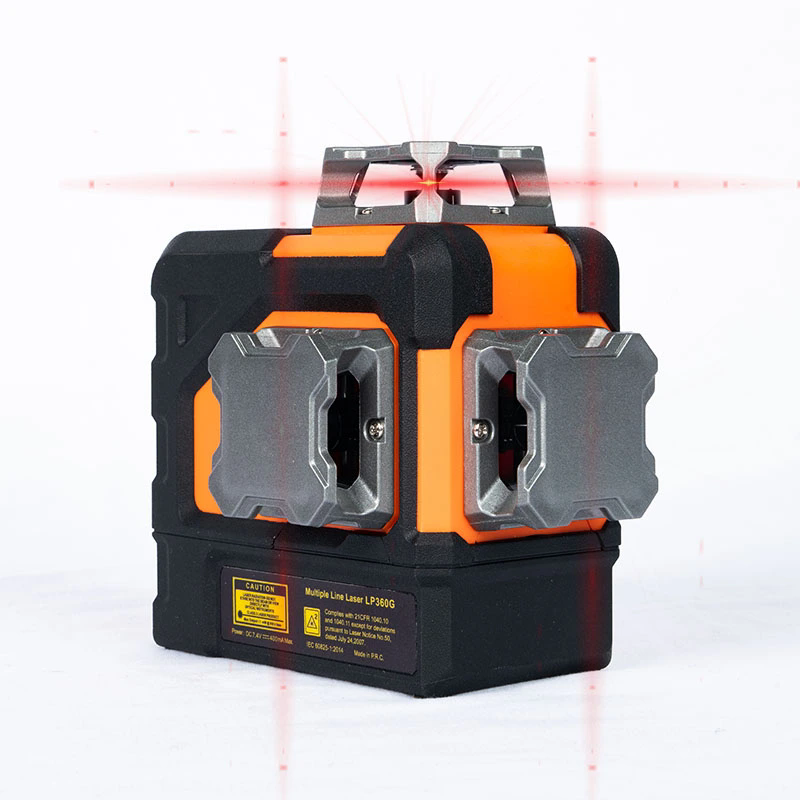
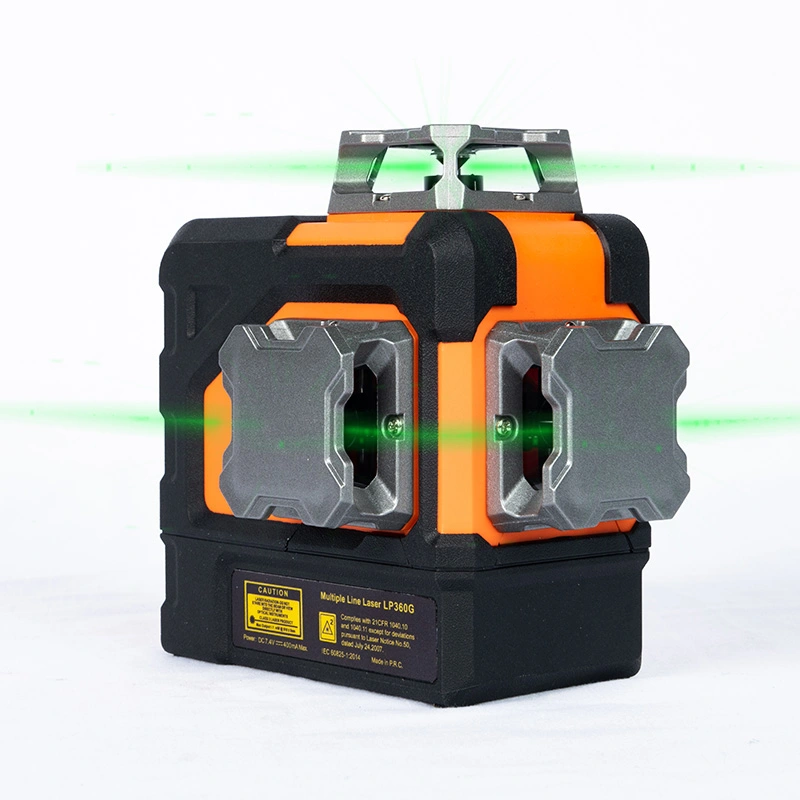
Indoor Red Beam Leveling Laser Level


Table of Contents


1. What Does Accuracy Mean for a Red Laser Level?

Accuracy for a Red Laser Level is the maximum deviation of the laser line or dot from its true level or plumb position, expressed as a value per unit of distance. The most common specification is +/- 0.2mm/m or +/- 0.3mm/m, which means that for every meter of distance from the laser, the line may deviate by that amount. A laser rated at +/- 0.2mm/m will have a deviation of 2mm at 10 meters, 4mm at 20 meters, and 6mm at 30 meters. This is a linear relationship: the error increases proportionally with distance. The table below illustrates how accuracy specifications translate into deviation at different distances.

Accuracy Rating Deviation at 5m Deviation at 10m Deviation at 20m Deviation at 30m
+/- 0.2mm/m 1.0mm 2.0mm 4.0mm 6.0mm
+/- 0.3mm/m 1.5mm 3.0mm 6.0mm 9.0mm
+/- 0.5mm/m 2.5mm 5.0mm 10.0mm 15.0mm

At Laizap, our factory manufactures Red Laser Levels with accuracy ratings from +/- 0.2mm/m to +/- 0.5mm/m. We provide a calibration certificate with every unit that verifies the accuracy at the specified distance. Our engineering team can help you interpret the accuracy specification and determine whether it meets your job site requirements.


2. How Do You Convert Accuracy Specifications into Job Site Tolerances?

Converting the accuracy specification into a job site tolerance requires a simple calculation. The first step is to determine the maximum distance over which the laser will be used. The second step is to multiply that distance by the accuracy rating. The third step is to compare the result to the tolerance specified for the job. If the calculated deviation is less than the tolerance, the laser is suitable. If the deviation is greater than the tolerance, a more accurate laser is required. The table below provides examples of this calculation for different job site tolerances.

Job Site Tolerance Maximum Distance Required Accuracy Recommended Laser Rating
3mm over 10m 10m 0.3mm/m +/- 0.2mm/m
5mm over 20m 20m 0.25mm/m +/- 0.2mm/m
10mm over 30m 30m 0.33mm/m +/- 0.3mm/m
15mm over 50m 50m 0.30mm/m +/- 0.3mm/m

At our factory, we work with our customers to perform this calculation for their specific applications. We understand that the accuracy rating alone is not enough; the laser must be matched to the distance and tolerance of the job. Our technical team can help you select the right Red Laser Level for your project.


3. Why Does Working Range Matter More Than Accuracy Alone?

The working range of a Red Laser Level is the maximum distance over which the laser can be used effectively. It is determined by the laser's power, the visibility of the beam, and the use of a detector. A laser with a high accuracy rating but a short working range may not be suitable for large job sites, while a laser with a long working range but a lower accuracy rating may be adequate for rough layout work. The working range is often more important than the accuracy rating because it determines whether the laser can be used at the distances required by the job. The table below compares the working range and accuracy of different laser classes.

Laser Class Typical Working Range Typical Accuracy Typical Application
Basic 10 - 15m +/- 0.5mm/m Interior layout, small rooms
Standard 20 - 30m +/- 0.3mm/m General construction, fit-out
Professional 30 - 50m +/- 0.2mm/m Large sites, precision work
Detector-Assisted 50 - 100m +/- 0.2mm/m Outdoor, long-range layout

At Changzhou Laizap Opto-Electro Technology Co., Ltd., our factory produces Red Laser Levels with working ranges from 15m to 100m, depending on the model and the use of a detector. We can help you select the laser that provides the right combination of working range and accuracy for your job site.


4. What Environmental Factors Affect Accuracy in the Field?

The accuracy of a Red Laser Level is affected by environmental conditions in the field. Temperature changes can cause the laser's internal components to expand or contract, affecting the beam's alignment. Vibration from machinery or traffic can cause the laser to shift. Bright sunlight can make the beam difficult to see, which reduces the effective working range. The table below summarizes these environmental factors and their effects.

Factor Effect on Accuracy Mitigation
Temperature Change Internal expansion, beam drift Allow laser to acclimate, use temperature-compensated models
Vibration Beam shift, loss of level Use sturdy tripod, avoid vibration sources
Bright Sunlight Reduced beam visibility Use detector, work at dawn/dusk
Dust and Moisture Lens contamination, internal damage Use IP-rated models, clean lens regularly

At our factory, we design our Red Laser Levels with temperature compensation and IP-rated housings to minimize the effects of environmental factors. We also offer detectors for outdoor use in bright sunlight. Our goal is to provide our customers with lasers that maintain their accuracy in real-world conditions.


5. How Do You Match Laser Accuracy to Different Applications?

Matching the laser accuracy to the application is the final step in the selection process. The table below provides a guide to matching laser accuracy to common construction applications.

Application Typical Tolerance Recommended Accuracy
Interior Partition Layout +/- 5mm over 10m +/- 0.5mm/m
Suspended Ceiling +/- 3mm over 10m +/- 0.3mm/m
Cabinet Installation +/- 2mm over 5m +/- 0.2mm/m
Tile Layout +/- 2mm over 5m +/- 0.2mm/m
General Construction +/- 10mm over 20m +/- 0.5mm/m
Landscaping +/- 20mm over 30m +/- 0.5mm/m

At our factory, we work with our customers to match the laser accuracy to their specific application. We can provide guidance on the appropriate accuracy rating for different types of work. Our goal is to help our customers select a Red Laser Level that meets their needs without over-specifying.


6. How Do You Evaluate a Red Laser Level Supplier?

Evaluating a supplier of Red Laser Levels requires a focus on calibration accuracy, build quality, environmental protection, and after-sales support. The supplier must provide a calibration certificate that verifies the accuracy of each unit. They must use high-quality components that maintain accuracy over time. They must provide IP-rated housings for durability on the job site. And they must offer after-sales support, including recalibration and repair services. The table below summarizes the evaluation criteria.

Evaluation Criterion What to Look For Why It Matters
Calibration Certificate Verifies accuracy at specified distance Ensures the laser meets its rated specification
Build Quality High-quality components, robust housing Maintains accuracy over time
Environmental Protection IP rating, temperature compensation Ensures accuracy in field conditions
After-Sales Support Recalibration, repair, warranty Ensures long-term reliability
Project Experience Construction industry references Demonstrates capability and reliability

At Changzhou Laizap Opto-Electro Technology Co., Ltd., our factory has been producing Red Laser Levels for over a decade. We provide a calibration certificate with every unit, use high-quality components, and offer after-sales support including recalibration and repair. We invite you to evaluate us against these criteria and to consider us as your partner for Red Laser Levels.


7. What Are the Key Product Parameters from Our Factory?

The following table provides the key product parameters for our Red Laser Levels. These lasers are designed for construction, interior fit-out, and general layout applications. Our factory can also produce custom lasers to meet specific requirements.

Parameter Specification Range Notes
Accuracy +/- 0.2mm/m to +/- 0.5mm/m Calibrated and certified
Working Range 15m to 100m Depends on model and detector use
Laser Class Class 2 (red beam) Safe for general use
Self-Leveling Range +/- 4 degrees Automatic leveling within range
IP Rating IP54 to IP65 Dust and water resistance
Power Supply AA batteries or rechargeable Selected for application
Mounting 1/4" or 5/8" tripod thread Standard tripod compatibility
Operating Temperature -10°C to +50°C Temperature compensated
MOQ 50 pieces Negotiable for large orders
Lead Time 2 - 4 weeks Depends on quantity and customization

At our factory, we manufacture our Red Laser Levels to meet these specifications and more. We can customize the accuracy, working range, and housing to suit your specific requirements. Our quality control system includes calibration of every unit, in-process inspection, and final inspection before shipment. Our goal is to provide our customers with high-quality Red Laser Levels that meet their performance requirements.


8. Frequently Asked Questions (FAQ)

Question 1: What does a +/- 0.2mm/m accuracy rating mean in practice?

Answer: A +/- 0.2mm/m accuracy rating means that the laser line may deviate by 0.2mm for every meter of distance from the laser. At 10 meters, the deviation is 2mm. At 20 meters, it is 4mm. At 30 meters, it is 6mm. This rating is suitable for most interior fit-out work, where the tolerance is typically 3mm over 10 meters. For longer distances or tighter tolerances, a more accurate laser may be required.

Question 2: How do I know if a red laser level is accurate enough for my job?

Answer: To determine if a Red Laser Level is accurate enough, calculate the maximum distance over which you will use the laser. Multiply that distance by the accuracy rating. Compare the result to the tolerance specified for the job. If the calculated deviation is less than the tolerance, the laser is suitable. If the deviation is greater, a more accurate laser is needed. Our technical team can help you perform this calculation.

Question 3: Does temperature affect the accuracy of a red laser level?

Answer: Yes, temperature changes can affect the accuracy of a Red Laser Level. The internal components can expand or contract as the temperature changes, causing the beam to drift. High-quality lasers are temperature-compensated to minimize this effect. For best results, allow the laser to acclimate to the ambient temperature before use, and avoid using it in extreme temperatures.

Question 4: What is the difference between accuracy and working range?

Answer: Accuracy is the maximum deviation of the laser line from its true position, expressed as a value per unit of distance. Working range is the maximum distance over which the laser can be used effectively. A laser can have high accuracy but a short working range, or a long working range but lower accuracy. When selecting a laser, both specifications must be considered.

Question 5: How often should a red laser level be recalibrated?

Answer: The recalibration interval depends on the manufacturer's recommendation and the conditions of use. For construction lasers used daily on job sites, an annual recalibration is recommended. For lasers used occasionally, a recalibration every two years may be sufficient. If the laser is dropped or exposed to extreme conditions, it should be recalibrated before use. Our factory offers recalibration services for our Red Laser Levels.


9. Conclusion

Accuracy is the most important specification for a Red Laser Level, but it is not the only specification. The accuracy rating must be interpreted in the context of the distance over which the laser is used, the tolerance specified for the job, and the environmental conditions in the field. By understanding how accuracy is specified, how it translates into job site tolerances, and how to match it to different applications, buyers can select a Red Laser Level that meets the job's requirements without over-specifying. At Changzhou Laizap Opto-Electro Technology Co., Ltd., our factory manufactures Red Laser Levels with accuracy ratings from +/- 0.2mm/m to +/- 0.5mm/m, working ranges from 15m to 100m, and calibration certificates for every unit.

Whether you are equipping a crew for interior fit-out, landscaping, or general construction, we invite you to contact us to discuss your requirements. We can provide samples, calibration data, and customized solutions. Our commitment to quality and customer satisfaction has made us a trusted partner for construction professionals around the world.

Contact Changzhou Laizap Opto-Electro Technology Co., Ltd. today to discuss your Red Laser Level requirements and discover how our lasers can meet your accuracy needs.

Related News
Leave me a message
X
We use cookies to offer you a better browsing experience, analyze site traffic and personalize content. By using this site, you agree to our use of cookies. Privacy Policy
RejectAccept