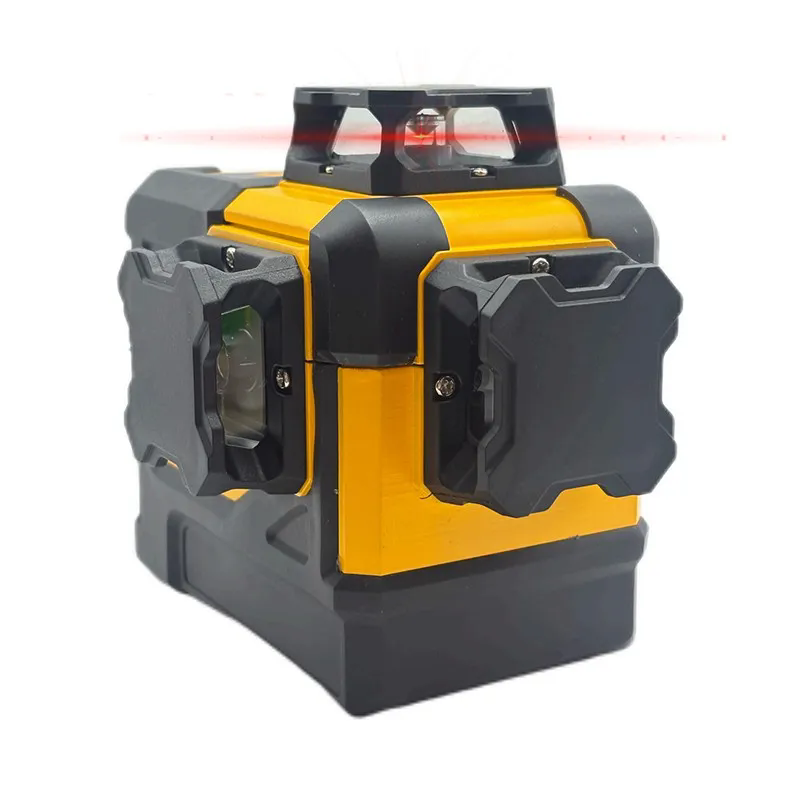
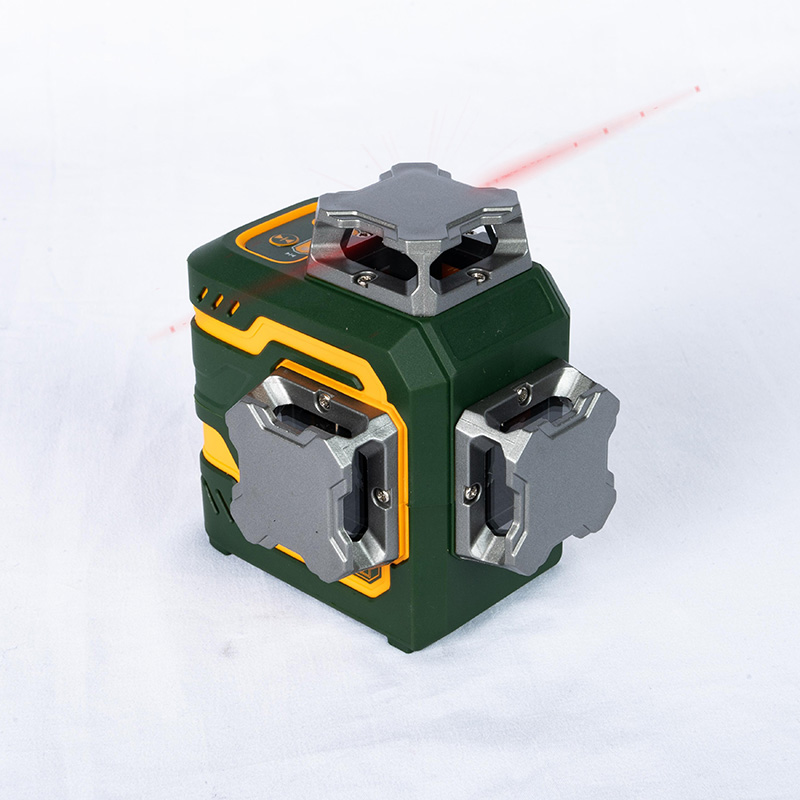
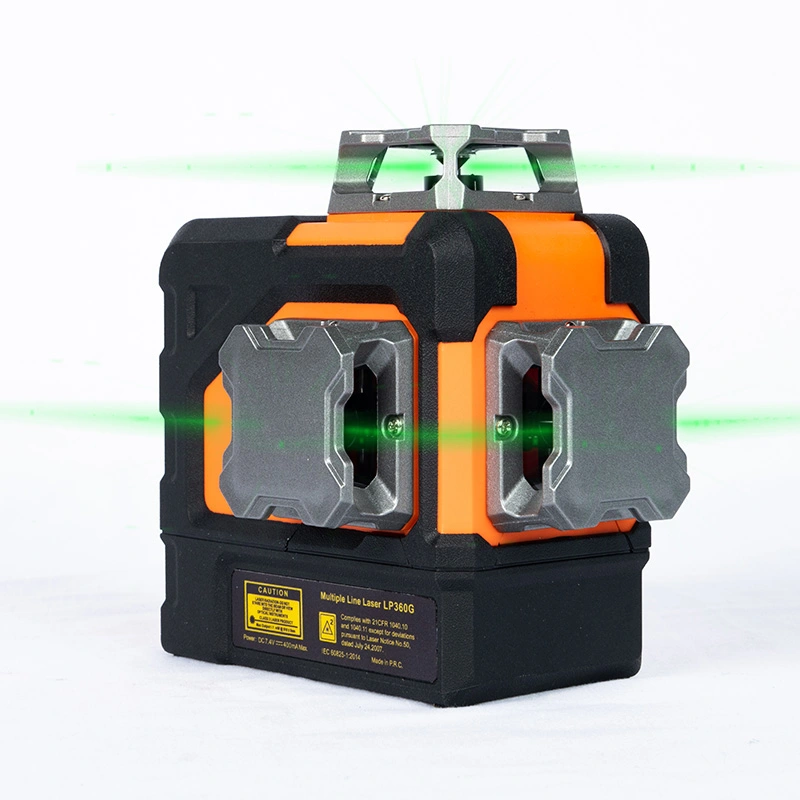
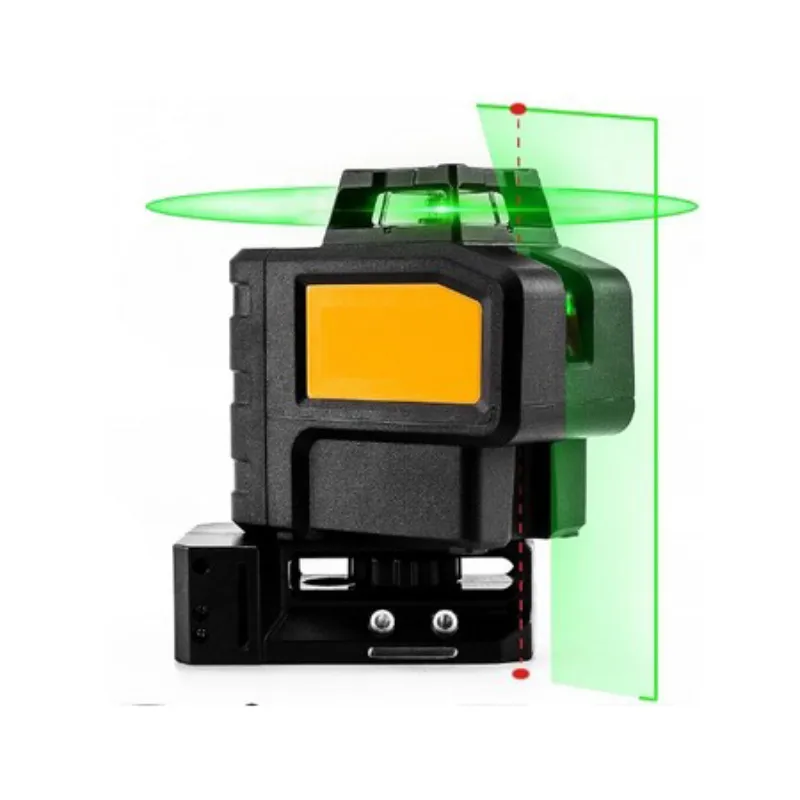
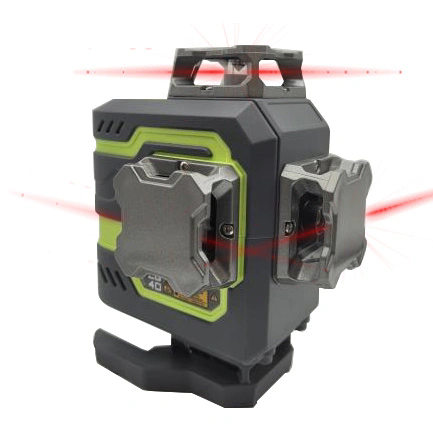
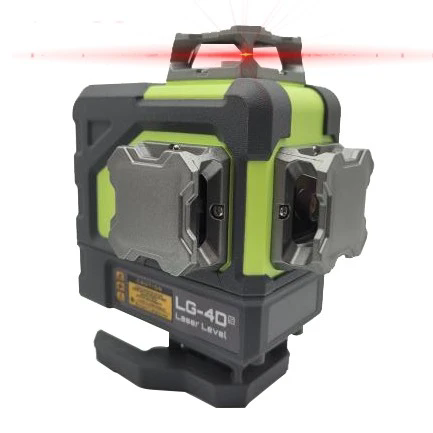
A Red Laser Level is a tool that projects a straight reference line onto a surface, and its usefulness depends entirely on whether that line can be seen. In a dimly lit interior, a red beam can appear bright and crisp. In a sunlit outdoor site, the same beam can disappear. On a dark concrete wall, the line may be faint. On a glossy white tile, it may be washed out by reflection. The visibility of a Red Laser Level is not a fixed property of the device. It is the result of an interaction between the laser source, the beam optics, the surface, the ambient light, the distance, and the atmosphere. For a procurement manager sourcing Red Laser Levels for a construction company, a rental fleet, or a distribution business, understanding these factors is the difference between buying a tool that is used and one that sits in the van.
This guide explains the factors that affect the visibility of a Red Laser Level in different work environments. It covers ambient light, surface reflectance and texture, distance and beam divergence, airborne particles and temperature, the product specifications that buyers should check, and the supplier evaluation criteria that determine whether a tool will perform in the field. The content is written from a procurement perspective, so that buyers can ask the right questions and interpret the answers correctly. Our factory at Changzhou Laizap Opto-Electro Technology Co., Ltd. manufactures Red Laser Levels for professional and trade applications, and the guidance below reflects the engineering and field experience behind our products.
Ambient light is the first factor because the human eye perceives a laser line by contrast, not by absolute brightness. The red beam must be brighter than the background surface by a sufficient margin for the line to stand out. In a dark room, the background is dim and the line is easy to see. In a sunlit room, the background is bright and the line must be much brighter to maintain the same contrast. A red laser level that performs well in a basement may be nearly invisible near a window at midday. This is why the same tool can be described as “excellent indoors” by one user and “useless outdoors” by another.
The practical limit of a red laser level in daylight is determined by the laser output, the beam quality, and the receiver compatibility. A red beam at 635 nm is more visible to the human eye than an infrared beam, but it is still limited compared with a green beam at 520 nm. A red laser level that is intended for outdoor use should be paired with a receiver, which detects the beam electronically rather than relying on the eye. The table below compares typical indoor and outdoor visibility conditions for a red laser level.
| Work Environment | Typical Ambient Light | Visibility Expectation | Practical Approach |
| Basement or interior room | Low, under 300 lux | Good to excellent | Direct visual reading |
| Office or retail interior | 300 to 1,000 lux | Moderate to good | Use a darker target surface or a detector |
| Window-adjacent interior | 1,000 to 5,000 lux | Low | Use a receiver or move the work area |
| Outdoor shade | 5,000 to 20,000 lux | Very low | Receiver required |
| Outdoor direct sun | 20,000 to 100,000 lux | Not visible to the eye | Receiver required, or switch to a green laser |
At Laizap, our factory designs red laser levels with the beam power and the optical quality that match the intended environment. We specify the indoor working range and the receiver-compatible outdoor range separately, so that buyers can match the tool to the actual job. The goal is to avoid the common mismatch between a tool’s marketing claim and its real-world visibility.
For a buyer, the ambient light question should be part of the procurement specification. The specification should state the expected light level at the work surface and whether the operator will use direct visual reading or a receiver. A red laser level that is specified for indoor use and a receiver is a practical tool. A red laser level that is expected to be visible in direct sunlight is a specification error.
Surface reflectance and texture change laser line visibility because the laser line is seen only when the surface scatters some of the beam back to the eye. A glossy surface reflects the beam in a specular direction, like a mirror. If the eye is not in that direction, the line appears weak or disappears. A matte surface scatters the beam in many directions, so some of the light reaches the eye regardless of the viewing angle. This is why a red laser line is often easier to see on a rough concrete wall than on a polished tile. The surface texture also affects the line width and the apparent sharpness. A rough surface diffuses the line and makes it look wider and softer. A smooth surface keeps the line thin and sharp but may create glare.
The surface color is a second variable. A dark surface absorbs more light and reduces the reflected signal. A light surface reflects more light and can wash out the line if the ambient light is also high. A red laser line is most visible on a surface that is mid-tone and matte, because the contrast is balanced and the scatter is diffuse. The table below summarizes the visibility of a red laser line on common construction surfaces.
| Surface | Reflectance | Texture | Red Line Visibility | Practical Note |
| Raw concrete | Medium | Rough | Good | Diffuse scatter, line visible from many angles |
| Painted drywall | High | Smooth to matte | Moderate | Light color can reduce contrast in bright rooms |
| Glossy tile | High | Specular | Low | Glare and reflection can hide the line |
| Dark steel | Low | Smooth | Low | Absorption reduces the reflected signal |
| Wood panel | Medium | Grain texture | Good | Grain can break the line but the contrast is acceptable |
| Glass | Very high | Specular | Very low | Beam passes through or reflects away |
Our factory at Changzhou Laizap Opto-Electro Technology Co., Ltd. tests our red laser levels on a range of surface samples, including concrete, drywall, tile, steel, and wood. We record the line visibility at different viewing angles and ambient light levels. The goal is to provide buyers with realistic performance data, not just a nominal working range.
For a buyer, the surface question should be matched to the job. A contractor who works mostly on raw concrete and drywall will find a red laser level useful for direct visual reading. A contractor who works on polished tile or glass should plan to use a detector or a different reference method. The procurement specification should state the target surfaces and the viewing conditions, so that the supplier can recommend the appropriate beam power and line thickness.
Distance and beam divergence play a decisive role because the laser line spreads as it travels. A red laser level emits a beam with a small but finite divergence. As the distance from the tool increases, the line becomes wider and the energy per unit area decreases. A wider line is easier to see at close range because it covers more surface, but at long range it becomes dim and fuzzy. The practical working range is the distance at which the line is still visible and still accurate enough for the task. The table below shows the relationship between distance, line width, and visibility for a typical red laser level.
| Distance | Approximate Line Width | Relative Brightness | Visibility to the Eye |
| 3 m | 1.5 to 2 mm | High | Excellent indoors |
| 10 m | 3 to 5 mm | Moderate | Good indoors, low outdoors |
| 20 m | 6 to 10 mm | Low | Receiver recommended |
| 30 m | 10 to 15 mm | Very low | Receiver required |
| 50 m | 15 to 25 mm | Marginal | Receiver required, line accuracy check needed |
The beam divergence is a design parameter. A narrow divergence keeps the line thin and bright at long range, but it requires more precise alignment and a higher-quality collimating lens. A wider divergence makes the line easier to find at close range, but it reduces the working range. A red laser level that is designed for indoor fit-out work may have a wider divergence and a shorter range. A red laser level that is designed for long-range site work may have a narrower divergence and a receiver-compatible output.
At Changzhou Laizap Opto-Electro Technology Co., Ltd., our factory specifies the divergence and the working range for each red laser level model. We also provide the line width at representative distances, so that buyers can match the tool to the task. The goal is to avoid a tool that is bright at 3 m but unusable at 20 m, or a tool that is narrow at 20 m but difficult to find at 3 m.
For a buyer, the distance question should be part of the use case. The specification should state the maximum working distance and whether the operator will use direct visual reading or a receiver. A red laser level that is intended for ceiling grid work at 3 to 5 m is a different tool from one intended for site layout at 30 m. The procurement team should ask for the line width and the brightness at the intended distance, not just the maximum range.
Airborne particles, temperature, and humidity affect red laser visibility because they change the optical path between the tool and the surface. Dust, smoke, and mist scatter the beam and make the line appear as a glowing volume rather than a sharp line. This can be helpful when the operator wants to see the beam path in the air, but it can be harmful when the operator needs a crisp line on the surface. Temperature changes can cause the tool’s internal components to expand or contract, which may shift the beam alignment. Humidity can cause condensation on the lens or the surface, which diffuses the beam and reduces visibility. The table below summarizes the effects of these atmospheric factors.
| Factor | Effect on the Beam | Effect on Visibility | Practical Mitigation |
| Dust | Scatters the beam in the air | Line becomes diffuse, surface line weakens | Clean the lens, use a receiver, control the dust |
| Smoke or mist | Creates a visible beam volume | Beam path visible, surface line less sharp | Use the beam path for alignment, not for fine reading |
| High temperature | Thermal expansion of the housing and optics | Possible beam drift, reduced accuracy | Allow the tool to stabilize, use a temperature-compensated model |
| Low temperature | Battery capacity drop, lens fogging | Reduced output, blurred line | Use a cold-rated battery, allow the tool to acclimatize |
| High humidity | Condensation on the lens or surface | Scattered beam, weak line | Use a sealed tool, wipe the lens, improve ventilation |
The temperature effect is often underestimated. A red laser level that is taken from a cold vehicle into a warm building may fog the lens and shift the beam for several minutes. A tool that is used in direct sun may heat up and lose accuracy. A well-designed red laser level includes temperature compensation and a housing that protects the optics from rapid temperature changes. Our factory at Changzhou Laizap Opto-Electro Technology Co., Ltd. specifies the operating temperature range and the warm-up time for each model. The goal is to provide a tool that performs predictably when the environment changes.
For a buyer, the atmospheric question should be part of the site assessment. The specification should state the expected dust, smoke, humidity, and temperature conditions. A red laser level that is used in a dusty site should have a sealed housing and a lens that is easy to clean. A red laser level that is used in a cold climate should have a battery that performs at low temperature. The procurement team should ask for the IP rating, the operating temperature range, and the warm-up time before the order is placed.
The product specifications that buyers should check fall into five groups: the laser source, the beam quality, the environmental rating, the power system, and the mounting and accuracy features. Each group determines whether the tool will be visible and reliable in the intended environment. The table below provides a procurement specification checklist for a red laser level.
| Specification Group | Parameter | Typical Value | Procurement Check |
| Laser source | Wavelength | 635 nm red | Confirm the visible red wavelength |
| Laser source | Laser class | Class 2 | Confirm the safety class and labeling |
| Beam quality | Line width at 10 m | 3 to 5 mm | Confirm the line width at the working distance |
| Beam quality | Working range | 15 to 30 m indoor, receiver range outdoor | Confirm the range for the intended environment |
| Environmental rating | IP rating | IP54 to IP65 | Confirm the dust and water protection |
| Environmental rating | Operating temperature | -10°C to +50°C | Confirm the site temperature range |
| Power system | Battery type and life | Li-ion or AA, 8 to 20 hours | Confirm the battery life and replacement availability |
| Mounting and accuracy | Self-leveling range | +/- 3 to 5 degrees | Confirm the leveling range and accuracy |
| Mounting and accuracy | Accuracy | +/- 0.2 to 0.5 mm/m | Confirm the accuracy at the working distance |
| Mounting and accuracy | Mounting thread | 1/4 inch or 5/8 inch | Confirm compatibility with tripods and mounts |
The laser class is a specification that buyers should not overlook. A Class 2 red laser level is safe for accidental short-term exposure, but it still requires the operator to avoid staring into the beam. A higher-class laser may be visible at a longer distance, but it carries additional safety requirements. The procurement team should confirm that the tool is labeled and documented for the destination market. Our factory at Changzhou Laizap Opto-Electro Technology Co., Ltd. provides the laser class, the wavelength, and the safety documentation for each red laser level model. The goal is to match the tool to the environment without compromising safety.
For a buyer, the specification checklist is the basis for comparing suppliers. A supplier that provides the full specification table is a supplier that understands the product. A supplier that provides only the working range and the price is a supplier that is leaving the selection risk to the buyer. The procurement team should request the specification table and a sample for field evaluation before the order is placed.
Buyers should evaluate a red laser level supplier by looking for the evidence that the tool will perform across the job sites the company actually works on. The evaluation should cover the product range, the specification transparency, the calibration and quality control, the after-sales support, and the field feedback. The table below provides a supplier evaluation matrix for a red laser level procurement project.
| Evaluation Area | What to Look For | Why It Matters |
| Product range | Indoor, outdoor, receiver-compatible models | Allows matching the tool to the site |
| Specification transparency | Wavelength, class, line width, range, IP rating | Allows objective comparison |
| Calibration and QC | Calibration certificate, accuracy test | Ensures the tool meets the accuracy claim |
| After-sales support | Warranty, spare parts, service network | Reduces downtime and cost of ownership |
| Field feedback | References from similar job sites | Confirms real-world visibility and durability |
The field feedback is particularly important for a red laser level because visibility is so dependent on the environment. A supplier that can provide references from contractors working in similar light, surface, and atmospheric conditions is a supplier that can support a realistic selection. A supplier that provides only a laboratory specification is a supplier that may not have tested the tool in the field. Our factory at Changzhou Laizap Opto-Electro Technology Co., Ltd. works with contractors and distributors to collect field feedback on our red laser levels, and we use that feedback to refine the beam power, the line width, and the housing design. The goal is to provide a tool that works on the job site, not just on the specification sheet.
For a buyer, the evaluation should include a sample test on the actual job site. The sample test should be performed at the intended working distance, on the intended surface, and at the intended time of day. The test should confirm that the line is visible, that the accuracy is acceptable, and that the tool is comfortable to use. A sample test is the most reliable way to confirm that a red laser level is suitable for a specific work environment. The procurement team should schedule the sample test before the purchase order is issued.
Question 1: Why is a red laser level harder to see outdoors than indoors?
Answer: A red laser level is harder to see outdoors because the ambient light is much higher. The human eye perceives the laser line by contrast against the background. In direct sunlight, the background is extremely bright, and the red beam is not bright enough to maintain the contrast. The practical solution is to use a receiver, which detects the beam electronically, or to select a green laser level, which is more visible in daylight.
Question 2: Does surface color affect red laser line visibility?
Answer: Yes. A dark surface absorbs more light and reduces the reflected signal, which can make the line appear faint. A light surface reflects more light and can wash out the line in a bright room. A mid-tone, matte surface usually provides the best contrast for a red laser line. Glossy surfaces can create glare and hide the line, while rough surfaces scatter the beam and make the line easier to see from different angles.
Question 3: How far can a red laser level be seen?
Answer: The visible range of a red laser level depends on the laser power, the beam divergence, the ambient light, and the surface. Indoors, a typical red laser level is visible to the eye at 15 to 30 m. Outdoors, the visible range is much shorter, and a receiver is normally required. The supplier should state the indoor visible range and the receiver-compatible range separately, so that the buyer can match the tool to the job.
Question 4: Does dust or smoke affect red laser level visibility?
Answer: Dust, smoke, and mist scatter the beam in the air. This can make the beam path visible as a glowing line, which is useful for alignment, but it can also reduce the sharpness of the line on the surface. In a dusty environment, the line on the surface may appear weaker because some of the beam energy is scattered before it reaches the surface. A sealed housing and a clean lens help maintain visibility.
Question 5: What specifications should I check before buying a red laser level for outdoor work?
Answer: For outdoor work, check the laser class, the wavelength, the receiver compatibility, the working range with a receiver, the IP rating, the operating temperature range, and the battery life. A red laser level that is intended for outdoor use should be paired with a receiver and should have a robust housing. The supplier should provide the receiver range and the environmental specifications, and the buyer should test the tool on the actual site before the order is placed.
The visibility of a Red Laser Level in different work environments is determined by the interaction of ambient light, surface reflectance and texture, distance and beam divergence, airborne particles and temperature, and the product specifications that define the tool’s performance. A red laser level that is excellent in a dim basement may be invisible in direct sunlight. A red laser level that is sharp on raw concrete may be washed out on glossy tile. For procurement teams, the key is to specify the work environment, the target surface, the working distance, and the light conditions, and to verify the tool with a sample test before the order is placed. Our factory at Changzhou Laizap Opto-Electro Technology Co., Ltd. manufactures Red Laser Levels for professional and trade applications, and we provide the specification data and field guidance that buyers need to make a confident selection. If you are sourcing Red Laser Levels for a construction, rental, or distribution business, contact our team to discuss your work environments and to request samples for evaluation.
Contact Changzhou Laizap Opto-Electro Technology Co., Ltd. today to discuss your Red Laser Level requirements and to request the specification and field performance data for your application.